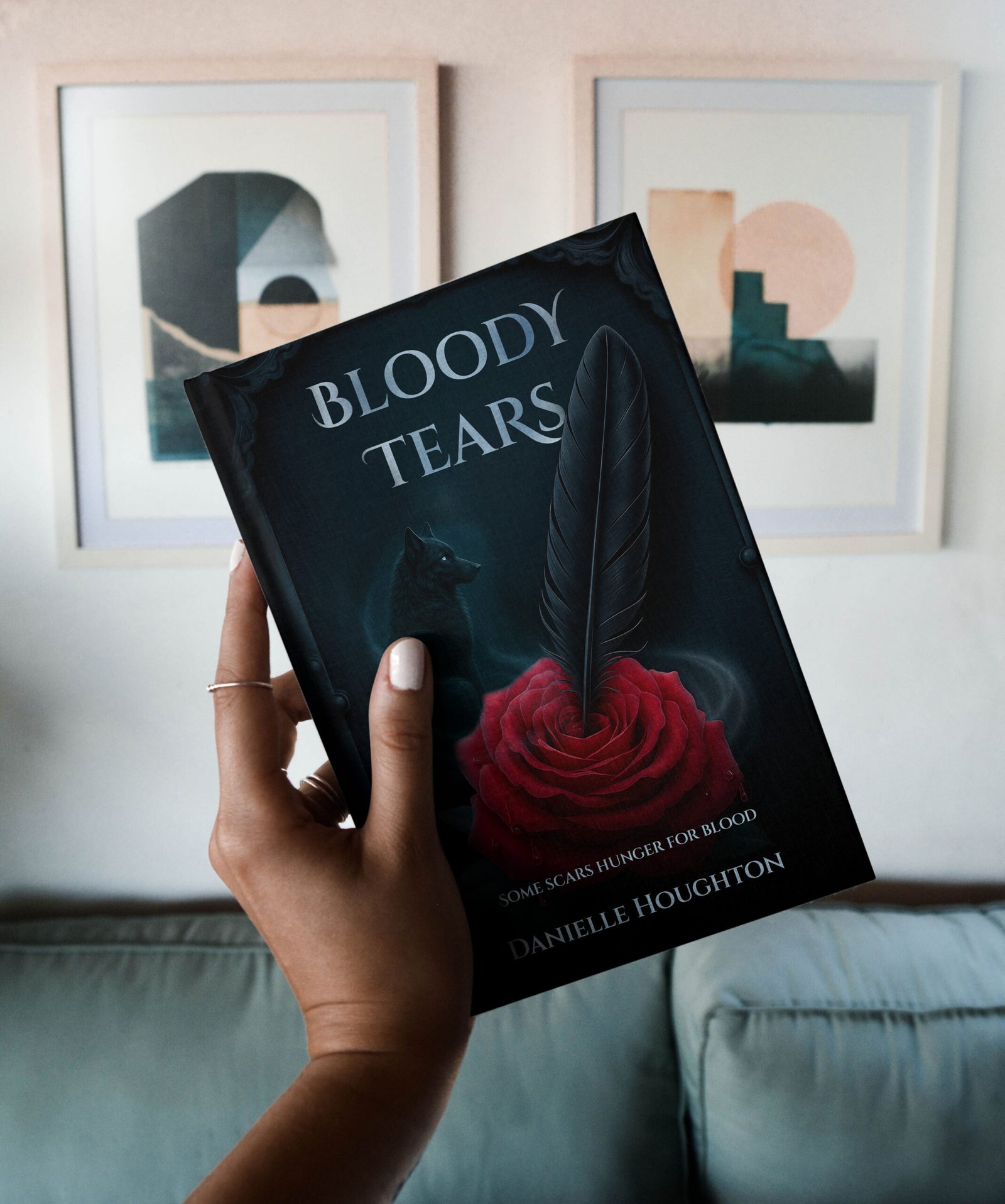
There is a fine line between exploring trauma and turning it into something palatable.
In fiction—especially in dark romance and gothic narratives—pain is often aestheticized. Violence becomes beautiful. Suffering becomes seductive. While those stories have their place, I knew Bloody Tears needed to do something different.
Trauma does not arrive cleanly. It fractures memory. It distorts perception. It lingers long after the moment has passed. Writing Desdemona’s story meant honoring that complexity without turning her pain into spectacle.
Rather than asking how much darkness a story could withstand, I asked a quieter question: what does survival actually look like?
In Bloody Tears, trauma isn’t a plot device—it’s a presence. It shapes decisions. It alters relationships. It refuses to resolve neatly. And while the novel contains elements of obsession and desire, they are never framed as salvation.
Power, in this story, does not come from being loved harder. It comes from recognition. From truth. From choosing oneself, even when that choice is painful.
For readers who have lived through their own forms of trauma, representation matters. Not the kind that offers easy redemption—but the kind that says: you are not broken for still carrying this.